
Building modular homes in Norway: what factory housing jobs pay and require
Nataliya Bondar · Published 6/2/2026
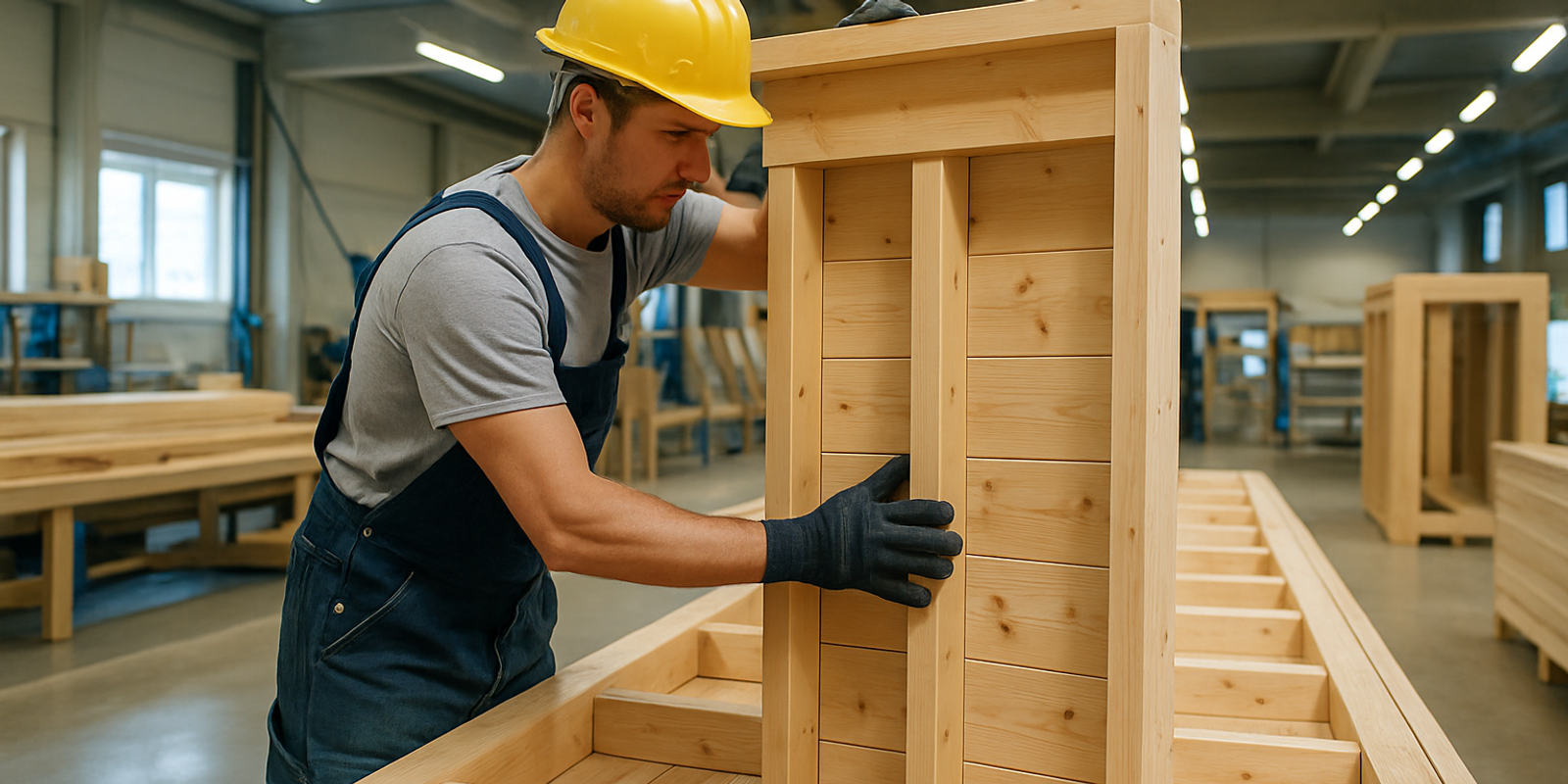
Norway's push toward energy-efficient, prefabricated housing has turned factory-housing production into a reliable source of year-round employment. Unlike traditional construction, factory work offers stable indoor shifts, predictable hours and a strong emphasis on precision craftsmanship.
Permits and registration: what you need before day one
EEA citizens register at the local police station (politistasjon) within 3 months and are entitled to work from arrival. Non-EEA workers need a skilled-worker permit (faglært arbeider) issued by UDI (Utlendingsdirektoratet) before entering Norway. Your employer must have a signed employment contract ready; the application typically takes 2–4 months. A Norwegian D-number (tax identification) is issued when you register, and you will need a Norwegian bank account to receive wages.
What factory housing jobs involve
Production roles span framing and panel assembly, insulation installation, window and door fitting, surface finishing (sanding, painting), and quality inspection. Most facilities operate a 2-shift system (day and evening), with a standard 37.5-hour week. You will work with timber, steel connectors, insulation boards and increasingly with digital measurement tools and BIM-linked assembly guides.
Wages and collective agreements
Wages in factory housing are governed by the Fellesoverenskomsten for byggfag (the Building and Construction Industries Joint Agreement) between NHO and Fellesforbundet. Entry-level wages for general operatives start at NOK 235–250 per hour (approx. €20–€22), rising to NOK 280–320 for qualified carpenters. Overtime (beyond 37.5 h/week) is paid at 140 % of the base rate. Employers covered by the agreement must also contribute to the AFP (Avtalefestet pensjon) early-retirement scheme.
Certifications that open doors
A Norwegian safety card (HMS-kort) is mandatory on all construction-related sites and is issued after a 40-hour basic safety course. Fork-lift and overhead-crane certifications are valued across most production roles. For higher-skilled positions, the fagbrev (trade certificate) in tømrerfaget (carpentry) or byggfaget (general construction) significantly increases your hourly rate. Bixter verifies that employers carry the required regional posting documentation before listing roles.